Quick Takeaways
- The spotted lanternfly is an invasive pest that has established itself across Northern Virginia, including Prince William County, and populations are expected to grow through 2026.
- This insect feeds on dozens of tree and plant species common to Manassas landscapes—including maples, oaks, black walnut, and fruit trees—weakening them over time and making them more vulnerable to disease and secondary pests.
- Virginia maintains an active spotted lanternfly quarantine with specific rules about moving regulated materials out of affected counties.
- Homeowners can make a real difference through proper identification, egg mass scraping, population reporting, and targeted treatment in coordination with a licensed professional.
- Spring is the most important time to act—catching nymphs early in the season limits the damage done before adult populations peak in late summer and fall.
- Since pests can leave your canopy brittle and prone to failure, checking for structural weaknesses now is a key part of preparing for emergency tree removal in Manassas before the heavy winds of May arrive.
If you’ve spent any time outdoors in Manassas over the past couple of years, there’s a good chance you’ve already seen them—or at least heard about them from a neighbor. The spotted lanternfly has made itself at home across a large swath of Northern Virginia, and Prince William County is firmly in the middle of its expanding range.
For most homeowners, the initial reaction is something between curiosity and low-level concern. The adult insects are actually striking-looking—bright red hindwings, polka-dotted forewings—and in the early years of an infestation, it can be easy to underestimate what they’re doing to the trees and plants around your property. By the time the damage becomes obvious, populations are often already well established.
Spring is the window that matters most. This is when spotted lanternfly egg masses hatch and the first nymphs emerge—small, vulnerable, and far easier to manage than the robust adult populations that take over in late summer. Getting ahead of this pest now, before the season is in full swing, is the most effective approach available to Manassas homeowners.
This guide covers everything you need to know: what spotted lanternfly is, how to identify it at every life stage, what it does to your trees, what the quarantine means for your property, and how to build a realistic management plan with the help of a qualified local tree service in Manassas VA.
What Is the Spotted Lanternfly?
The spotted lanternfly (Lycorma delicatula) is a planthopper—not a true fly—native to China, India, and Vietnam. It was first detected in the United States in Berks County, Pennsylvania in 2014 and has spread rapidly through the Mid-Atlantic region since then. Virginia confirmed its presence and established a quarantine in 2018, and populations have continued to expand across the commonwealth’s northern counties.
Unlike some invasive pests that target a single host species, spotted lanternfly is a generalist feeder. It has been documented to feed on more than 70 different plant species, which makes it a broad landscape threat rather than a problem isolated to one type of tree or shrub.
The pest feeds by piercing plant tissue and extracting sap. Large populations feeding on a single tree or across a planting can cause significant stress, reducing vigor, damaging bark, and leaving trees more exposed to disease and opportunistic secondary pests. On top of that, spotted lanternfly excretes a sugary waste product called honeydew that accumulates on leaves, branches, and anything beneath the tree—patio furniture, cars, decks—and promotes the growth of sooty mold, a black fungal coating that interferes with photosynthesis and leaves an unsightly mess.
Spotted Lanternfly in Manassas and Prince William County
Prince William County is fully within Virginia’s spotted lanternfly quarantine zone, and populations in the Manassas area have been growing. The landscape conditions here—a mix of mature hardwood trees, ornamental plantings, wooded lots, and significant populations of tree of heaven (Ailanthus altissima), the pest’s preferred host—create conditions where spotted lanternfly can thrive.
Tree of heaven is worth a specific mention. This fast-growing invasive tree is common throughout Northern Virginia, often growing along fence lines, in disturbed areas, and at the edges of wooded lots throughout Manassas. It’s the spotted lanternfly’s preferred host plant, and large tree of heaven populations function as population reservoirs that support high densities of the pest even when other host plants are managed. Addressing tree of heaven on or near your property is one of the most effective landscape-level steps you can take.
The wooded stream corridors and park edges around Manassas—along Bull Run, near the Manassas National Battlefield Park, and in the green spaces that thread between developments off routes 28, 234, and Balls Ford Road—also provide habitat that supports spotted lanternfly movement into residential yards. Properties that back up to woods or that have mature canopy trees have higher exposure than those in more open settings.
Identifying Spotted Lanternfly at Every Life Stage
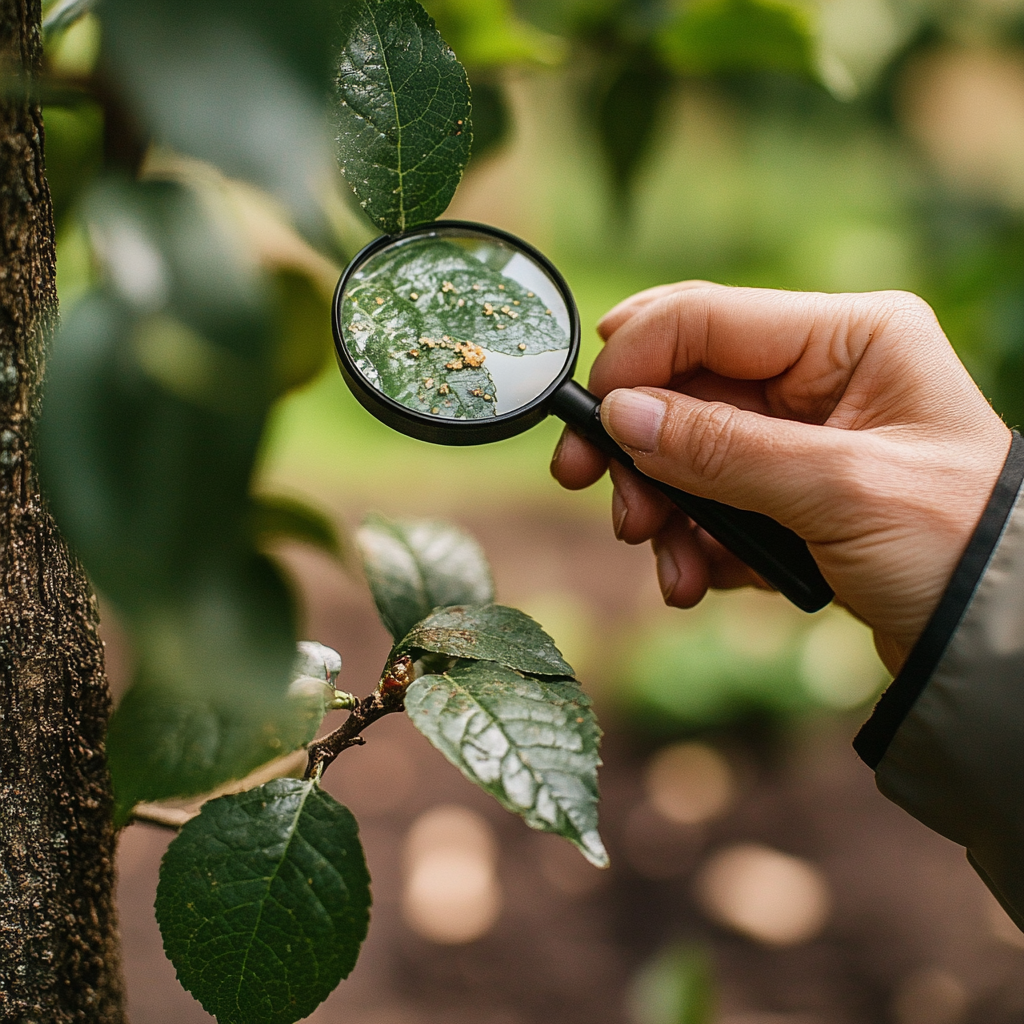
Effective management starts with knowing what you’re looking at. Spotted lanternfly looks different depending on where it is in its annual cycle, and confusing it with a native insect leads to missed opportunities and wasted effort.
Egg Masses
Spotted lanternfly overwinters as eggs. The egg masses are laid in the fall—typically September through November—on hard surfaces including tree bark, fencing, deck boards, outdoor furniture, stone walls, and vehicles. If you park near trees frequently or store equipment outdoors, egg masses can travel on those surfaces unnoticed.
A fresh egg mass looks like a smear of light gray or brown mud, roughly an inch long and half an inch wide, with rows of small seed-like eggs beneath a waxy coating. As the coating weathers over winter, it can crack and look more like dried putty or a patch of gray gum. They’re easy to overlook if you don’t know what to look for.
Checking your trees, fencing, deck structures, and outdoor furniture for egg masses in late winter and early spring—before hatching begins—is one of the highest-value actions a homeowner can take. Scraping and destroying egg masses before they hatch removes the next generation before it starts.
Early Nymphs (First and Second Instar)
Spotted lanternfly eggs typically hatch in Virginia starting in late April or May, depending on temperatures. First and second instar nymphs are small—less than a quarter inch—and black with white spots. They’re easy to miss against dark bark, and they move quickly when disturbed. At this stage they’re feeding on a wide variety of herbaceous plants as well as tree seedlings and new growth.
Early nymphs are the most vulnerable stage of the insect’s life cycle. Targeted treatment in May and early June, when nymphs are small, is generally more effective and requires lower-volume applications than treating adult populations later in the season.
Late Nymphs (Third and Fourth Instar)
By late June and into July, late-stage nymphs are larger—up to half an inch—and have developed striking red coloring with black and white markings. At this stage they’re more mobile and are increasingly found higher in the canopy, making them harder to contact with ground-level treatments. They’re distinctive enough that most homeowners who see them recognize something unusual is present.
Adults
Adult spotted lanternflies typically appear in July and August and are present through the first hard frost. They’re about an inch long when at rest, with mottled gray and black forewings that conceal vivid red hindwings. When they open their wings to fly, that flash of red is unmistakable.
Adults congregate in large numbers—sometimes hundreds of insects on a single tree—and this late-season population explosion is when the most visible damage and honeydew accumulation tends to occur. By the time you’re seeing large adult aggregations in your trees, the season’s feeding is well underway. This is why spring management is so much more effective than waiting until adults are visible.
How to Tell Spotted Lanternfly Apart from Native Insects
The most common misidentification is with the ailanthus webworm moth, which also feeds on tree of heaven and has a spotted, colorful pattern. The webworm moth is smaller, has a distinctly different wing pattern, and doesn’t have the red hindwing of spotted lanternfly. Native planthoppers are generally much smaller and lack the distinctive markings. When in doubt, Virginia Cooperative Extension has photo guides and a reporting hotline that can help with identification.
Which Trees and Plants Are Most at Risk on Your Manassas Property?
The spotted lanternfly’s broad host range means that most Manassas landscapes have multiple vulnerable plants. Here are the species most commonly affected in this area.
High-Risk Trees
Tree of heaven (Ailanthus altissima): The preferred host by a significant margin. If you have this tree on or near your property, spotted lanternfly will find it. Managing or removing tree of heaven is one of the most direct ways to reduce pest pressure on your other plants.
Maples (Acer spp.): Red maples, silver maples, and sugar maples are all heavily targeted. Given how common maples are in Manassas neighborhoods—used extensively as shade trees and street trees—this is a significant concern for residential landscapes.
Black walnut (Juglans nigra): A native species common in the older wooded lots around Manassas. Black walnut produces a substance called juglone that suppresses many other plants, so losing a mature black walnut has cascading effects on the surrounding landscape.
Oaks (Quercus spp.): Various oak species are fed upon, though oaks generally show more resilience than some other hosts when otherwise healthy and well-maintained.
Tulip poplar (Liriodendron tulipifera): A common and fast-growing native tree in Northern Virginia that spotted lanternfly feeds on readily.
Sycamore, willow, and birch: All documented hosts that are reasonably common in Manassas residential and riparian settings.
Fruit Trees and Grape Vines
Spotted lanternfly has caused significant damage to orchards and vineyards in Pennsylvania and is a serious concern for homeowners with fruit trees or grapevines. Apple, peach, cherry, and plum trees are all at risk, as are backyard grapevines. If you have fruit trees on your property, priority management around those plants is warranted.
Ornamentals
Hops, roses, and various ornamental trees have also been documented as hosts. A population that builds up on tree of heaven or a maple may spread feeding pressure to ornamental plantings nearby.
The Virginia Spotted Lanternfly Quarantine: What It Means for Your Property
Prince William County is within Virginia’s spotted lanternfly quarantine zone, which is administered by the Virginia Department of Agriculture and Consumer Services (VDACS) in coordination with USDA APHIS.
The quarantine is designed to limit the movement of spotted lanternfly and its egg masses into non-infested areas. The practical implications for homeowners in Manassas include the following.
What the Quarantine Restricts
Moving regulated articles out of the quarantine zone without proper documentation or a compliance agreement is prohibited. Regulated articles include nursery stock, logs, firewood, outdoor furniture, vehicles, and other items that could harbor egg masses or live insects. If you’re moving any of these items—particularly if you’re a landscaper, contractor, or nursery operator—you need to check for spotted lanternfly before transport.
For most homeowners, the most relevant rule is around firewood and plant material. Avoid transporting firewood cut from properties in the quarantine zone to areas outside it, and inspect any outdoor items—trailers, equipment, patio furniture—for egg masses before moving them out of the area.
Reporting Obligations
Spotted lanternfly sightings in areas outside established quarantine zones should be reported to VDACS promptly. Within quarantine zones like Prince William County, reporting is still encouraged and helps agencies track population trends and plan management responses.
You can report spotted lanternfly sightings through the VDACS website or through the Virginia Invasive Species Early Detection app.
Management Options: What Actually Works
There’s no single treatment that eliminates spotted lanternfly from a property, and broad chemical applications that harm beneficial insects are not the right approach. Effective management combines several tactics tailored to the season and the specific situation on your property.
Scraping Egg Masses
In late winter and early spring—February through April—walk your property and inspect trees, fencing, outdoor structures, and any hard surfaces for egg masses. Use a stiff card or scraper to dislodge them into a container of hand sanitizer or rubbing alcohol, which kills the eggs. Scraping into a plastic bag and crushing is also effective. Don’t just scrape them onto the ground—egg masses can still hatch if left intact.
This is labor-intensive but extremely effective when done thoroughly. A single egg mass contains 30 to 50 eggs, so removing even a modest number of masses before spring can meaningfully reduce the season’s population.
Sticky Bands (With Caution)
Sticky bands wrapped around tree trunks have been used to trap nymphs as they move up and down tree trunks. However, Virginia Cooperative Extension and Penn State Extension—which has done extensive research on spotted lanternfly management—have both noted that sticky bands frequently trap birds, squirrels, and other non-target wildlife. If you use sticky bands, they should be covered with wire mesh that allows small insects through while excluding larger animals, and they need to be checked and replaced frequently. This approach is better suited to monitoring than mass trapping.
Circle Traps
Circle traps are a more wildlife-safe alternative that physically guides insects crawling up the trunk into a collection container. They’re more involved to set up but don’t carry the same non-target risk as open sticky bands.
Targeted Insecticide Applications
For meaningful population reduction—particularly on high-value trees or around outdoor living areas—licensed pesticide applications are the most effective tool available.
Systemic treatments: Products containing dinotefuran or imidacloprid can be applied as trunk sprays or soil drenches and are taken up by the tree, making the sap toxic to feeding insects. These are effective but come with tradeoffs—systemic neonicotinoids can be harmful to pollinators if they reach flowers, so timing and species selection matter. Systemic applications on flowering trees should be done by a licensed professional who understands these risks and can select appropriate products and timing.
Contact insecticides: Products containing pyrethrin, bifenthrin, or carbaryl can be applied directly to spotted lanternfly populations and provide quick knockdown of nymphs and adults. They don’t provide lasting residual protection the way systemics do, but they’re useful for spot treatment of heavy infestations or for protecting specific trees or areas.
All pesticide applications for spotted lanternfly on landscape trees should be handled by a licensed applicator in Virginia. A qualified tree service in Manassas VA will be able to recommend the right approach based on your specific trees, the level of infestation, and the proximity to gardens, water features, or pollinator habitat.
Tree of Heaven Management
Removing tree of heaven from your property—or treating it to prevent suckering and regrowth—removes a primary breeding reservoir that supports spotted lanternfly populations. This is one of the most effective landscape-level interventions available.
Tree of heaven is notoriously difficult to remove because it resists cutting by sending up numerous root sprouts. Effective management typically combines cutting with immediate herbicide application to the cut stump—a technique that requires a licensed applicator in Virginia. A local arborist familiar with invasive species management can walk you through the right approach for your situation.
Spring Action Plan for Manassas Homeowners
Here’s a practical, season-by-season breakdown of what to prioritize.
Now Through April
- Walk your property and inspect all trees, fencing, deck boards, outdoor furniture, and hard surfaces for spotted lanternfly egg masses.
- Scrape and destroy any egg masses you find.
- Identify any tree of heaven on or adjacent to your property and plan for management.
- Schedule a professional inspection if you have high-value trees, fruit trees, or a history of heavy spotted lanternfly activity on your property.
May and June
- Monitor for first and second instar nymphs—small, black with white spots—on herbaceous plants and young tree growth.
- This is the primary treatment window for nymph-targeted insecticide applications. Contact a licensed tree service to evaluate whether treatment is appropriate.
- Continue checking for egg masses on surfaces that may have been missed in early spring.
July Through September
- Adult populations will build through the summer. Continue monitoring and treat as needed around high-value trees or outdoor living areas.
- Report large or unusual aggregations to VDACS, especially if you’re in an area at the edge of established quarantine zones.
- Avoid moving firewood, outdoor furniture, or other items that may carry egg masses outside the quarantine zone without inspection.
October and November
- Adult populations begin to decline after the first frost.
- This is when egg-laying begins—mark your calendar to start another round of egg mass inspections in late winter.
Frequently Asked Questions
Is it legal to kill spotted lanternfly in Virginia? Yes. Spotted lanternfly is an invasive pest, and Virginia actively encourages residents to kill them on sight. Scraping egg masses, swatting adults, and trapping nymphs are all legal and encouraged. For chemical treatments, licensing requirements apply—contact a licensed applicator for anything beyond DIY management.
Will spotted lanternfly kill my trees? Spotted lanternfly rarely kills trees outright through a single season of feeding—healthy, mature trees can typically withstand some infestation. The risk is cumulative and compounding: repeated heavy infestations year after year weaken trees, reduce growth, and make them more susceptible to disease, drought stress, and secondary pests. Young trees, fruit trees, and trees already under stress are at higher risk of serious decline.
My whole neighborhood seems to have them. Does managing just my property make a difference? Yes, for a few reasons. Reducing populations on your property protects your highest-value trees from the most intense feeding pressure. It also reduces the source population that can spread to neighboring properties. And coordinated community action—where multiple homeowners manage simultaneously—is more effective than any individual effort in isolation. Talk to your neighbors and your HOA.
Are spotted lanternfly traps available at garden centers? Various trapping products are commercially available. Their effectiveness varies, and some trap designs pose non-target wildlife risks as noted above. Before purchasing traps, check Virginia Cooperative Extension’s current recommendations for the most up-to-date guidance on products that are both effective and safe for use in residential settings.
Can I spray my trees myself? Homeowners can apply certain pesticides without a license for use on their own property. However, for treatments involving systemic insecticides applied to tree trunks or soil—particularly near water, gardens, or flowering plants—professional application is strongly recommended both for efficacy and to avoid unintended harm to beneficial insects and the surrounding environment.
Resources for Manassas Homeowners
- Virginia Department of Agriculture and Consumer Services (VDACS): vdacs.virginia.gov — current quarantine maps, reporting tools, and fact sheets.
- Virginia Cooperative Extension – Prince William County: Local extension agents can provide county-specific guidance and connect you with resources.
- USDA APHIS Spotted Lanternfly Resources: Federal-level research summaries and management guidance.
- Penn State Extension: Has produced some of the most detailed research-backed management guidance available for homeowners, applicable to the Virginia context.
Protecting Your Manassas Landscape Starts with a Plan
Spotted lanternfly is not going away on its own, and populations across Prince William County are likely to continue growing. The homeowners who fare best are the ones who take the spring window seriously—scraping egg masses before they hatch, getting ahead of nymph populations with targeted treatments, and addressing tree of heaven as a root cause of persistent pressure on their property.
None of this requires a dramatic overhaul of your landscape. It requires attention, the right information, and in many cases a qualified professional who knows what they’re looking at and what to do about it.
Call United Tree Care — Your Local Spotted Lanternfly Experts in Manassas
United Tree Care serves homeowners throughout Manassas and Prince William County with spotted lanternfly assessments, targeted treatment programs, tree of heaven removal, and ongoing seasonal monitoring tailored to your specific property.
We know what a Prince William County yard looks like in spring—the tree species, the soil conditions, the pest pressures that come with the territory—and we can give you a clear, honest assessment of where your landscape stands and what it actually needs. No guesswork, no one-size-fits-all recommendations.
Contact United Tree Care today to schedule your spring spotted lanternfly inspection. The earlier in the season you act, the more effective your management plan will be—and the better your trees will look come fall.