Article Summary
- A cracked tree trunk is rarely a cosmetic issue—it signals structural compromise that worsens over time without intervention
- Different crack types carry different risk levels, and knowing which you’re looking at changes how urgently you need to act
- Manassas’s clay soils, freeze-thaw cycles, and summer storm activity accelerate crack development in ways unique to this region
- Ignoring a trunk crack creates cascading problems—decay, pest intrusion, and eventual catastrophic failure
- Some cracked trees can be stabilized and saved with professional intervention; others have passed the point where that’s realistic
- Calling a qualified tree service in Manassas early gives you far more options than waiting until failure is imminent
- The cost of proactive professional assessment is a fraction of what emergency tree removal and structural repair typically runs
- While structural hazards like cracks threaten a tree’s integrity, proactively using smart tree solutions for Manassas properties with overgrown trees blocking sunlight will revitalize your landscape and maximize your property’s natural light safely.
Most homeowners who notice a crack in a tree trunk on their property do one of two things: they either worry about it briefly and then put it out of their minds, or they walk past it every day without registering what they’re looking at. Both responses are understandable. A crack in a tree doesn’t look like an emergency. The tree is still standing. It still has leaves. Life goes on.
But a cracked trunk is one of those problems that doesn’t stay static while you’re deciding what to do about it. It progresses—sometimes slowly over several seasons, sometimes faster than anyone expects after a single weather event—and the gap between “this might become a problem” and “this is now an emergency” can close a lot quicker than the homeowner who walked past it for two years anticipated.
This article covers what actually happens inside a cracked tree trunk over time, what different crack types mean for the tree’s structural condition, why Manassas properties face specific risk factors that accelerate the problem, and what a qualified tree service in Manassas can do to help—before the situation makes the decision for you.
First: Not All Trunk Cracks Are the Same
Before getting into what happens when you ignore a crack, it’s worth being clear that “cracked trunk” describes a range of situations with meaningfully different risk profiles. The type of crack you’re dealing with shapes everything about how urgently it needs attention.
Frost Cracks
Frost cracks—also called radial shakes—are vertical splits that run along the length of the trunk and are caused by rapid temperature changes. In Manassas, these most commonly develop during sharp winter cold snaps when the outer wood of the trunk cools and contracts faster than the warmer inner wood, creating tension that splits the wood along the grain.
Frost cracks have a distinctive characteristic: they tend to open in cold weather and partially close again as temperatures warm. A tree may develop the same frost crack repeatedly over multiple winters. The crack itself is a sign of thermal stress, but not all frost cracks represent immediate structural failure—the key questions are how deep the crack penetrates, whether it has introduced decay, and whether it’s getting progressively larger over successive winters.
Lightning Cracks
Lightning strikes to trees are more common in Manassas than many homeowners realize—the area’s position in the Northern Virginia Piedmont puts it in the path of frequent summer electrical storms, and tall isolated trees are obvious lightning targets. A lightning crack is typically a vertical split that runs the length of the trunk, sometimes spiraling with the wood grain, often accompanied by bark that has been blown off the trunk in a strip.
Lightning cracks can look dramatic but don’t always kill a tree immediately. The tree may continue to leaf out normally the following season while the crack—and the internal damage that extends beyond what’s visible—progressively worsens. The structural integrity of a lightning-struck trunk needs professional assessment rather than visual observation from a distance.
Basal Cracks and Root Collar Cracks
Cracks that develop at or near the base of the trunk—in the root collar zone where the trunk meets the soil—are among the most structurally serious. This area is the mechanical pivot point of the entire tree. It’s where the load of the canopy translates into the root system, and it’s where wood decay fungi most commonly establish themselves.
A crack at the base of the trunk, particularly one that shows any softness in the adjacent wood or any fungal growth nearby, is a situation that calls for immediate professional evaluation. These cracks are not candidates for a wait-and-see approach.
Co-Dominant Stem Splits
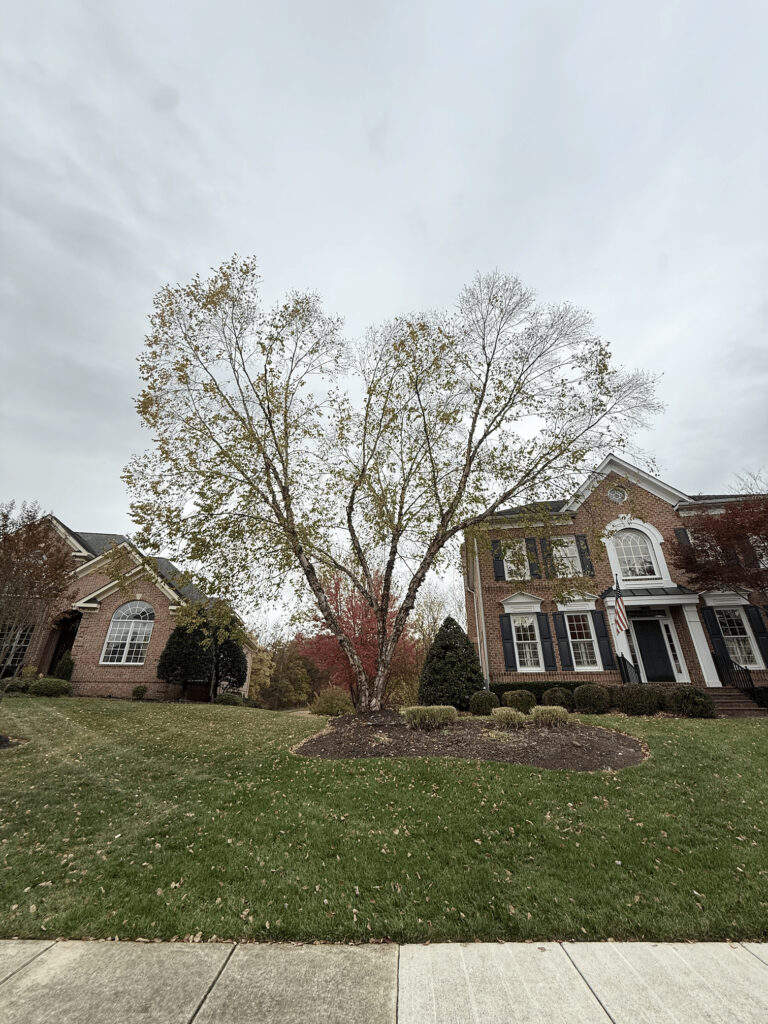
Where two or more main stems grow from the same point on the trunk with an included bark union between them—a situation described in detail in the warning signs article in this series—the splitting apart of those stems is technically a trunk crack of its own category. The included bark between co-dominant stems can split progressively under seasonal load, and a stem union that was tight last spring may have opened noticeably by the following fall.
Mechanical and Impact Cracks
Cracks caused by physical impact—a vehicle strike, storm debris impact, or equipment contact during construction or landscaping work—represent acute structural damage at the impact site. These cracks may be accompanied by wound wood that’s trying to callus over the injury, or they may show no healing response if the damage was severe enough to interrupt the tree’s vascular function in that area.
What Actually Happens When You Leave a Crack Unaddressed
The progression from crack to crisis isn’t random. It follows a fairly predictable sequence that a qualified tree service in Manassas has seen many times—and that sequence accelerates significantly in the climate and soil conditions specific to this area.
Stage One: The Crack Opens the Door to Decay
The most immediate consequence of an unaddressed trunk crack is exposure of the interior wood to the elements—water, air, and the fungal spores that are present in the environment at all times. Healthy, intact bark is the tree’s primary defense against wood decay fungi. Once that defense is breached by a crack, the exposed wood becomes a colonization site.
Wood decay fungi don’t need much of an opening. A crack a fraction of an inch wide, with moisture collecting in it during rain events, creates exactly the conditions in which decay fungi establish themselves. Once established, they begin breaking down the structural wood tissue—slowly at first, but progressively faster as the fungal colony grows and the wood becomes softer and more permeable.
In Manassas’s climate—hot and humid from late spring through early fall, with periods of wet weather that keep moisture levels high—wood decay fungi are particularly active. A crack that goes untreated through a single Manassas summer and fall has been exposed to weeks of warm, moist conditions that favor rapid fungal establishment.
Stage Two: The Crack Widens With Seasonal Movement
Unaddressed cracks don’t stay the same size. The freeze-thaw cycles that Manassas experiences through winter—temperatures dropping below freezing at night and climbing above it during the day, sometimes multiple times in a single week—cause water trapped in a crack to expand when it freezes, physically forcing the crack wider. This hydraulic action of freezing water is the same mechanism that damages pavement and concrete, and it works just as effectively on wood.
Each winter cycle opens the crack incrementally. Spring brings slightly wider separation than the previous year. Summer fungal activity progresses deeper into the wider crack. The following winter opens it further. This progression continues until either a professional intervenes or the tree reaches a structural failure threshold.
The clay soils of Manassas add another layer to this cycle. As discussed elsewhere in this content series, those soils experience meaningful shrinkage during summer droughts and expansion during wet periods. A tree in Manassas clay that’s already dealing with a structural crack is also experiencing movement at its root base as the soil shifts seasonally—movement that translates up through the trunk and works on the crack from below.
Stage Three: Pest Intrusion
Decaying wood is a premium habitat for a range of insects, and an unaddressed trunk crack with established fungal decay becomes a target. Carpenter ants are one of the first arrivals—they don’t eat the decaying wood, but they excavate galleries in it for nesting, furthering the structural compromise. Their presence is often visible as fine, sawdust-like frass accumulating at the base of the crack or in crevices around the root collar.
Wood-boring beetles follow, particularly in trees that are already stressed by drought, root damage, or the progressive decline that comes with advancing decay. Their larval galleries cut through the sapwood and cambium layer—the tissues responsible for water and nutrient movement through the tree—creating damage that accelerates canopy dieback even as the structural decay below continues.
In Northern Virginia, trees under stress from trunk damage and decay are also more susceptible to secondary pest establishment by species like the two-lined chestnut borer in oaks and various bark beetle species that target weakened hardwoods.
Stage Four: Canopy Decline Signals Deep Structural Problems
By the time canopy symptoms appear—dieback in the upper crown, sparse leaf coverage, premature fall color in isolated branches—the structural situation underground and in the trunk is typically well advanced. Canopy decline in a tree with an unaddressed trunk crack means the fungal decay or pest damage has progressed far enough to meaningfully interrupt vascular function.
At this stage, the tree is simultaneously a declining biological organism and an increasingly unstable physical structure. The combination is particularly dangerous during Manassas’s active storm season. A structurally compromised trunk doesn’t need a major weather event to fail—a moderate summer thunderstorm with wind gusts that a healthy tree would handle without incident can be enough to bring it down.
Stage Five: Structural Failure
The endpoint of an ignored trunk crack, absent intervention, is eventual structural failure. This may happen as a clean trunk break at the crack site, as a split along the full length of a co-dominant stem union, or as a root system failure in a tree whose structural compromise has extended to the root collar. When it happens, it happens quickly—in a matter of seconds—and the damage it causes is proportional to what was in the fall zone.
For Manassas homeowners whose cracked trees are near the house, near a driveway, near vehicles, or over any occupied outdoor area, this endpoint represents a genuine liability and safety risk that grows with every season the crack goes unaddressed.
Why Manassas Properties Face Specific Accelerating Factors
Some of the conditions that drive crack progression faster in Manassas are worth naming explicitly, because they affect how urgently a given situation needs professional attention compared to a similar tree in a different climate or soil environment.
The Freeze-Thaw Cycle Is Particularly Active Here
Manassas sits in a climatic zone where winters are genuinely cold but frequently interrupted by mild spells—creating many more freeze-thaw cycles per winter than either the Deep South or the upper Midwest typically experiences. This repeated cycling is harder on existing cracks than either sustained freezing or sustained above-freezing temperatures would be. The mechanical action of repeated ice formation and thaw in a crack works on the wood progressively over a Manassas winter in ways that accumulate meaningfully across several seasons.
Clay Soil Movement Adds Mechanical Stress
The expansive clay soils that underlie most of Manassas’s residential neighborhoods move with moisture changes in ways that translate mechanical stress to the root collar and lower trunk. A tree that’s already dealing with a basal crack or a root collar crack is being subjected to additional seasonal movement from below—movement that works on the crack with every shrink-and-swell cycle.
Storm Frequency and Severity
The Northern Virginia region sees significant weather in most years—summer derechos, late-season tropical system remnants, nor’easters, and the frequent severe thunderstorm activity that affects the area through the warm season. Each storm event applies wind loading to a compromised trunk that it might not survive if the structural situation has progressed far enough. The question of when a cracked tree will fail is partly a question of how many more severe weather events it will encounter before something gives.
Dense Residential Tree Canopy
The mature canopy in many Manassas neighborhoods means that cracked trees are often in close proximity to other trees, structures, and utilities. When a structurally compromised tree fails, the fall zone in a densely planted residential lot is rarely clear. Other trees, fences, structures, and infrastructure are typically within the impact radius—which means the consequences of a failure are often more extensive than they would be in a more open setting.
Can a Cracked Tree Be Saved? What a Tree Service in Manassas Can Actually Do
This is the question homeowners most want answered, and the honest response is: sometimes yes, sometimes no, and the difference between those two answers is almost entirely determined by how early a professional gets involved.
Structural Cabling and Bracing
For trees where the crack has been identified before significant decay has established—and where the structural integrity of the wood on either side of the crack is still sound—professional cabling and bracing can sometimes stabilize the tree and extend its life significantly.
Cabling installs high-strength cable between major scaffold branches above the crack site, providing supplemental support that reduces the dynamic load the crack is subjected to during wind events. Bracing installs threaded rods through the crack or through a co-dominant stem union to hold the wood in alignment and prevent further opening.
These are professional installations that require assessment of the tree’s overall structural condition, the crack geometry, and the load distribution in the canopy. They’re not permanent solutions—cabled trees need periodic inspection and cable tension adjustment as the tree grows—but they can be effective management tools for trees that have significant value and are not yet beyond the point of reasonable stabilization.
Decay Management and Wound Treatment
For cracks that have admitted moisture and may have early-stage fungal colonization, proper wound treatment and removing the conditions that are allowing water to sit in the crack can slow decay progression. This might involve cleaning the crack of loose material, improving drainage so water doesn’t pool, and in some cases applying wound treatments—though current arboricultural standards are cautious about wound sealants, which can trap moisture and create anaerobic conditions that favor rather than discourage certain decay organisms.
What this isn’t: a fix that reverses existing decay. Decay that has established in heartwood or structural sapwood cannot be undone by any treatment. Managing it means slowing its progression and buying time, not reversing the clock.
Targeted Pruning to Reduce Load
Reducing the canopy load on a structurally compromised trunk—through crown thinning or selective branch removal—decreases the stress the crack is subjected to during wind events. A tree carrying less canopy sail area experiences less dynamic loading in a storm, and reducing that load can meaningfully extend the period before structural failure becomes imminent.
This is often combined with cabling—reducing the load while providing supplemental support creates the most favorable conditions for a compromised tree that is otherwise a removal candidate.
When Removal Is the Only Realistic Answer
A cracked tree has passed the point where stabilization is realistic when decay has progressed through more than roughly one-third of the trunk’s cross-section at the crack site, when the root collar is significantly compromised, when canopy dieback indicates systemic vascular disruption, or when the crack has opened to a width and depth that leaves insufficient sound wood on either side to support the tree’s load.
At this point, removal isn’t a failure—it’s the correct professional judgment. Attempting to cable or brace a tree that has progressed beyond the stabilization threshold doesn’t make the property safer; it creates a false sense of security around a tree that will eventually fail anyway.
A qualified tree service in Manassas will give you a straight assessment of where a given tree falls on this spectrum—not a sales pitch for removal, and not false reassurance that stabilization is possible when it isn’t.
The Cost Argument for Acting Early
For homeowners who are hesitant to call a tree service in Manassas because of cost concerns, it’s worth running through the actual numbers that early action versus delayed action typically produces.
A professional assessment of a cracked tree costs relatively little and takes an hour or two of an arborist’s time. If the tree is stabilizable, cabling and bracing adds to that cost but is still a fraction of what removal typically runs.
Emergency tree removal—called in after a tree has failed or is on the verge of failure—runs significantly higher than planned removal of the same tree. Emergency rates, crane requirements for fallen trees in confined spaces, and the debris management associated with a catastrophic failure all add to the base removal cost.
If the tree falls on a structure, those removal costs are accompanied by repair costs—roof damage, structural damage, fence and hardscape replacement, and any vehicle damage in the fall zone. Even with homeowner’s insurance covering a portion of structure-related damage, deductibles and potential premium impacts make a fallen tree expensive.
And if the tree falls on a person—a scenario that Manassas homeowners with cracked trees over driveways, play areas, and outdoor living spaces need to take seriously—no cost calculation is adequate.
Acting early, when a tree service in Manassas can assess the situation on your schedule rather than an emergency basis, is consistently the more cost-effective path.
What to Do Right Now If You Have a Cracked Tree
If you’re reading this article because you have a tree with a visible trunk crack and you’re trying to figure out what to do, here’s a practical sequence.
Don’t touch it yet. Particularly if the crack is at the base of the trunk or if the tree is leaning at all, don’t approach it closely until you know what you’re dealing with. A tree that has progressed to an active structural failure risk can move or drop limbs without warning.
Photograph the crack from a safe distance. Document what you’re seeing—the location of the crack on the trunk, its approximate length and width, any fungal growth or wood discoloration visible at the crack, and whether the tree is showing any lean. Date the photographs.
Note what’s in the fall zone. Look at what would be in the path of a trunk failure or major limb drop from this tree—structures, vehicles, utility lines, walkways, play areas. This information helps an arborist prioritize the urgency of their assessment.
Call a qualified tree service in Manassas promptly. Not eventually—promptly. The difference between an assessment this week and an assessment next month is another month of freeze-thaw cycling, fungal activity, and structural progression. An ISA-certified arborist can evaluate the crack in person, probe the wood for decay, assess the root collar condition, and give you a realistic picture of what you’re dealing with and what the options are.
Keep the area restricted until assessed. If the cracked tree is near a frequently used area—a driveway, a play area, a deck, a path between the house and the garage—restrict access to that area until the tree has been professionally evaluated. This is not an overreaction. It’s proportionate caution for a situation whose actual risk level you don’t yet know.
Trust United Tree Care to Give You the Full Picture
A cracked tree trunk is one of those situations where the right professional response is honest assessment—not automatic removal, and not reassurance that everything is fine when a closer look suggests otherwise.
United Tree Care provides professional tree service throughout Manassas and Northern Virginia, with ISA-certified arborists who know how to evaluate structural cracks, assess decay progression, and give homeowners a clear, straightforward answer about what their trees actually need. Whether that’s a cabling installation, targeted pruning to reduce load, a planned removal on your schedule, or a monitoring plan for a crack that’s genuinely low-risk—the assessment starts with a real look at the tree rather than a predetermined conclusion.
If you have a cracked tree on your Manassas property and you’ve been putting off the call, this is the right time to make it. Reach out to United Tree Care today and get a professional set of eyes on the situation before the next storm season makes the decision for you.