Article Summary
- Tree removal is one of the most injury-prone home tasks—knowing the risks upfront changes how you approach it
- Identifying hazards before work begins is the single most effective safety step homeowners can take
- Power lines, unstable root systems, and unpredictable wood tension create risks that aren’t visible to untrained eyes
- DIY tree work has a defined safe limit—understanding where that limit is protects you and your property
- The right personal protective equipment makes a real difference, even for minor cleanup work
- Manassas-specific factors—clay soils, storm saturation, overhead utilities—create unique local hazards
- Knowing when to step back and call a licensed professional is a safety decision, not a defeat
Every year, homeowners across Northern Virginia get hurt attempting tree work they didn’t fully anticipate. Not because they were careless—most of them were careful people who’d done plenty of yard work before. They got hurt because tree removal looks more manageable than it is, and because the things that make it dangerous aren’t always obvious until something has already gone wrong.
In Manassas, the combination of mature tree canopy, frequent storm activity, and residential lots where trees grow close to structures creates real safety stakes for homeowners. Whether you’re cleaning up minor storm debris, trimming back a low-hanging limb, or considering taking down a smaller tree yourself, this guide gives you the practical safety framework to do it right—and to recognize the moments when the right call is a phone call to a professional.
Understand the Real Risk Profile Before You Pick Up a Chainsaw
It’s worth being direct about this: tree removal and large-limb cutting consistently rank among the most dangerous home improvement activities. The U.S. Consumer Product Safety Commission tracks thousands of chainsaw-related injuries annually, and that number doesn’t count ladder falls, struck-by injuries from falling limbs, and the less common but devastating incidents involving contact with utility lines.
None of this is meant to make homeowners afraid of their own yards. It’s meant to reset the baseline. Most people approach tree work the way they approach painting a room or fixing a fence—as a manageable DIY project with minimal downside if something goes sideways. Tree work doesn’t behave that way. The consequences of a miscalculation are often immediate and serious.
The good news is that most tree-related injuries are preventable with proper preparation, honest hazard assessment, and a clear sense of where your skill level ends.
Start With a Full Hazard Assessment of the Tree and Site
Before any work begins—before you move a ladder, start a saw, or put on gloves—walk the entire work zone and assess what you’re actually dealing with.
Look Up First, Always
The most common missed hazard in residential tree work is overhead. Dead branches caught in the canopy above the work area—what arborists call “widow makers”—can dislodge from vibration, wind, or the movement of the tree during cutting. A branch you didn’t notice 40 feet up can drop without warning.
Stand back and look at the full canopy from multiple angles before getting close. If you see dead wood, hanging branches, or limbs that appear lodged against other branches, treat the area beneath them as a no-entry zone until those are addressed by someone qualified to remove them safely.
Check for Utility Lines in and Around the Tree
Power lines running near or through a tree’s canopy are among the most serious hazards in residential tree work—and they’re more common in Manassas than homeowners often realize. Older neighborhoods near Old Town, routes along Sudley Road, and many of the established subdivisions off Route 28 have overhead distribution lines running through mature tree canopy that has grown up around them over decades.
Even when lines appear to be insulated, that insulation degrades over time and should never be assumed to be protective. Contact with an energized line through a saw, a falling branch, or a metal ladder can be fatal.
If any part of the tree you’re working on is within 10 feet of a utility line, stop. This work requires utility coordination and a licensed professional with the right equipment and clearance to work near energized conductors. Contact Dominion Energy Virginia if you’re uncertain whether lines near your property are active.
Assess the Ground Conditions
Manassas sits on clay-dominant soils that behave very differently depending on moisture. After a heavy rain—and this area gets plenty of them, particularly in late spring and through summer—that clay becomes soft and unstable in ways that affect everything from ladder placement to root system integrity.
A tree that looks firmly rooted on a dry day may have a significantly compromised root plate after a week of heavy rain. Look at the base of the tree before working near it: heaving soil, cracks radiating from the root zone, and any visible lifting of the root plate are signs that the tree’s foundation is less stable than it appears from above.
Wet grass and soft soil also make ladder placement unreliable. If the ground is saturated, reschedule the work.
Identify All Structures, Fencing, and Underground Utilities in the Fall Zone
Map out where the tree could fall if something goes wrong—and assume something could go wrong. The fall zone is typically at least the full height of the tree in all directions from the base. Inside that zone, account for:
- The house, garage, shed, or any other structure
- Fencing, HVAC units, vehicles, and play equipment
- Neighboring property and structures
- Underground utilities—call 811 (Virginia’s dig-safe line) before any work that involves digging near the base or removing a root ball
Know Your DIY Limit—And Respect It
There’s meaningful tree work that homeowners can safely handle themselves, and there’s work that shouldn’t be attempted without professional training, proper equipment, and insurance. The line between them is more defined than most people think.
What Is Reasonable for a Homeowner to Handle
- Removing fallen branches already on the ground, up to about 4 inches in diameter
- Cutting and stacking wood from branches that have already come down cleanly
- Light pruning of small branches from the ground using hand pruners or loppers
- Raking and hauling brush away from a cleared area
- Removing small ornamental shrubs or young trees under 4 inches in trunk diameter, with no overhead hazards
Even within this category, using a chainsaw requires proper training, appropriate PPE, and a clear understanding of the basic cutting techniques that prevent kickback.
What Should Go to a Professional
- Any tree that is leaning toward a structure, utility line, or neighboring property
- Any work that requires a ladder or climbing
- Any limb over 4 to 6 inches in diameter
- Trees with visible decay, cracks, or root damage
- Any tree or limb near or in contact with a power line
- Removing stumps below grade
- Felling a tree in a confined space where controlling the fall direction is difficult
- Any situation where you’re not fully certain of the outcome before the first cut
The last point is more important than it might seem. Professional arborists talk about reading a tree before cutting—understanding the tension, lean, and weight distribution before the saw touches the wood. This kind of assessment comes from training and experience, and without it, cuts can go wrong in ways that are very hard to reverse once they start.
Personal Protective Equipment: What You Actually Need
If you’re doing legitimate DIY work within the scope described above, wearing the right gear makes a real difference.
Eye protection: Flying wood chips and sawdust are a constant in any cutting work. Safety glasses or a face shield are non-negotiable—even for small pruning jobs with hand tools.
Hearing protection: Chainsaws operate at noise levels that cause hearing damage in relatively short exposures. Foam earplugs or earmuff-style protectors belong on any time you’re running a saw.
Cut-resistant gloves: Leather or cut-resistant work gloves protect hands during both cutting and cleanup. Regular garden gloves are not adequate for chainsaw work.
Chainsaw chaps or cut-resistant pants: For anyone operating a chainsaw, cut-resistant leg protection is not optional. Chainsaw chaps are designed to jam the saw’s drive sprocket on contact, stopping the chain before a cut becomes a serious injury. They’re available at most hardware stores for less than $60 and are worth every dollar.
Steel-toed boots: Falling wood, logs rolling off a pile, and dropped tools are all common in tree work. Boots with steel toes and ankle support reduce the injury risk from all of them.
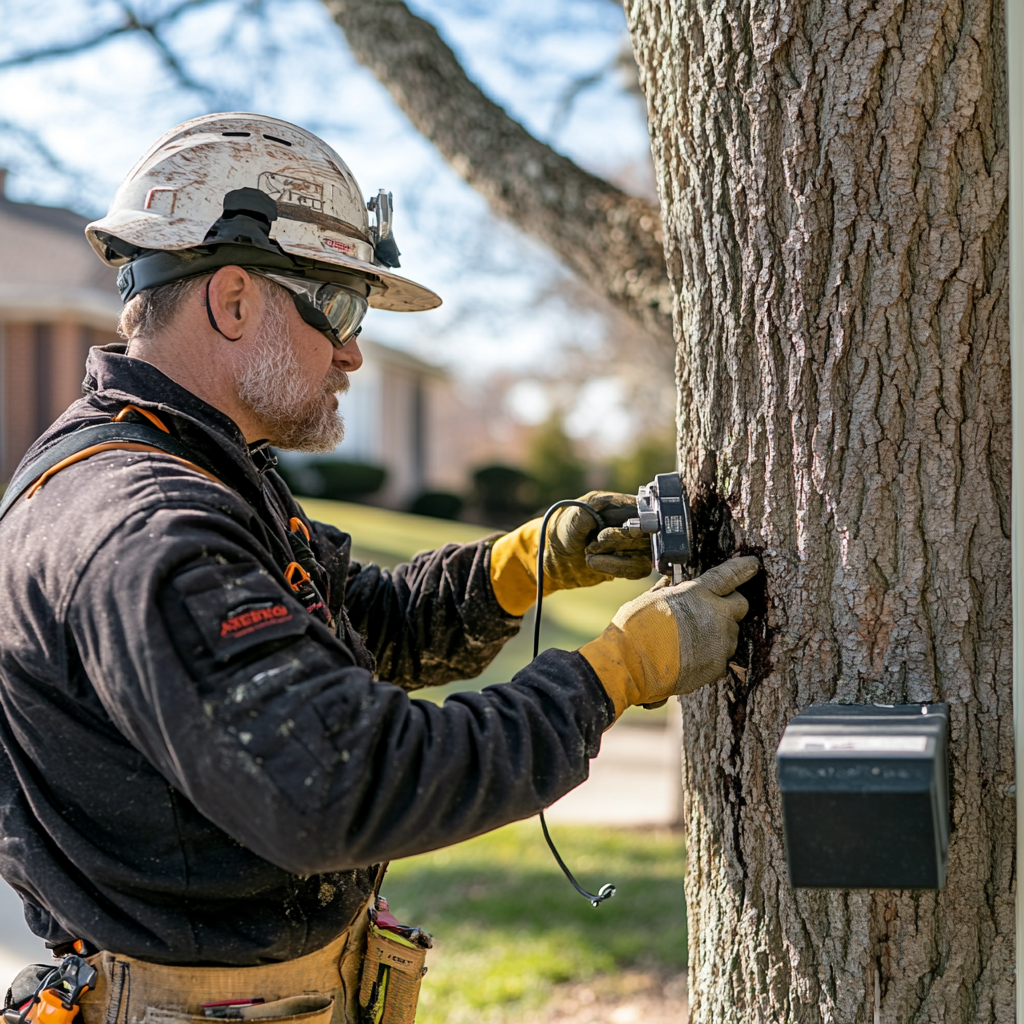
Hard hat: For any overhead work or work near a tree canopy, a hard hat protects against the limbs and debris that fall without warning.
Resist the temptation to skip pieces of this kit because “it’s just a small job.” Most injuries happen on small jobs because that’s when people feel comfortable enough to cut corners.
Safe Chainsaw Practices for Homeowners
If you’re using a chainsaw for yard cleanup or small tree work, these fundamentals apply every single time.
Inspect the Saw Before Starting
Check the chain tension, the chain brake, the oil level, and the condition of the bar. A dull or improperly tensioned chain doesn’t cut cleanly—it grabs, bounces, and increases kickback risk. Take five minutes to inspect the tool before starting it.
Understand Kickback and How to Avoid It
Kickback is the sudden, violent upward rotation of the bar that happens when the tip of the chain contacts an object unexpectedly. It’s fast, it happens in the direction of the operator’s face and upper body, and it’s one of the leading causes of serious chainsaw injuries.
To reduce kickback risk: keep the tip of the bar out of contact with anything you’re not actively cutting, use both hands on the saw at all times, keep the chain brake functional and engaged when not actively cutting, and never cut above shoulder height.
Always Have a Clear Escape Route
Before making any cut, identify where you’ll move when the wood starts to fall—and make sure that path is clear of obstacles. The two or three steps you take away from a falling piece of wood need to be unobstructed. People get hurt when they step back and trip over a log, a root, or a piece of equipment they didn’t account for.
The standard escape route is at a 45-degree angle to the rear of the cut, away from the direction of fall.
Never Work Alone
If you’re doing any chainsaw work or working near large debris, have another person present—not to help hold branches or assist with cuts, but to call for help if something goes wrong. Cell phones in pockets don’t do much good in an emergency if you’re incapacitated. A second person at a safe distance can make the difference between a bad situation and a catastrophic one.
Ladder Safety Around Trees
Ladders and trees are a genuinely risky combination, and most professionals avoid using standard ladders in tree work precisely because the anchor points are unstable and unpredictable.
If you’re using a ladder for any reason near a tree—trimming a low branch, cleaning gutters near the canopy, or accessing a roof to check storm damage—follow these basics:
Set the ladder on firm, level ground only. Never prop a ladder against a tree branch, a leaning trunk, or soft post-storm soil without confirming the base is fully stable. Use a standoff or ladder stabilizer near the house to keep the top of the ladder from shifting.
Keep your hips between the rails at all times. Reaching outside the rails moves your center of gravity and dramatically increases the risk of a tip-over. If you have to reach, come down and move the ladder.
Never carry a running chainsaw up a ladder. This should go without saying, but it happens. No cut is worth the risk this creates.
If the work you need to do requires going more than a few feet up a ladder, that work almost certainly calls for professional equipment and trained personnel.
Specific Hazards in Manassas That Homeowners Should Know About
Local conditions matter in tree safety, and Manassas has a few characteristics that make awareness especially important.
Saturated Clay Soils After Heavy Rain
As mentioned earlier, the clay-heavy soils common throughout Prince William County and the City of Manassas retain water in ways that affect tree stability. After a significant rain event, wait at least 24 to 48 hours before doing any significant tree work. The root systems of damaged or stressed trees are most likely to fail when the soil around them is saturated.
The Derecho and Storm-Damage Scenario
Northern Virginia has experienced multiple derecho events in recent years—fast-moving, straight-line wind storms that can damage or topple trees across a wide area in minutes. In the aftermath of these events, the combination of widespread damage, adrenaline, and the urge to clear things quickly leads to a spike in homeowner injuries.
After a major storm, the priority is assessment, not speed. A tree that came down across the driveway during a storm last night isn’t going anywhere. Take the time to evaluate it properly before touching it.
Buried Infrastructure and Underground Utilities
The Manassas area has a mix of older infrastructure and newer development that creates an uneven picture of what’s underground. Water lines, gas lines, electric service laterals, and cable infrastructure can run through unexpected locations—including through root zones of trees near the house.
Any work that involves digging—root removal, stump extraction, or even replanting after removal—requires a call to 811 first. The service is free and available throughout Virginia, and it marks out utility locations before you break ground.
HOA Requirements and City Tree Ordinances
Safety isn’t only about physical hazards. Doing tree work without understanding local requirements can create legal and financial problems that are their own kind of headache.
The City of Manassas has an Urban Forestry program with specific rules around tree removal on private property, particularly for trees above certain size thresholds. Prince William County has tree preservation provisions in its Zoning Ordinance that apply in many residential situations. Some HOAs in the Manassas area also have their own requirements about tree work, approved contractors, and debris disposal.
Before beginning any significant tree work, a quick check with the relevant authority—or simply asking a licensed local tree service—confirms you’re operating within the rules.
When to Call a Professional: A Plain-Language Guide
If you’re on the fence about whether a job is within your skill level, run through these questions honestly:
Is the tree or any part of it near a utility line? If yes, call a professional.
Does the work require climbing more than a few feet off the ground? If yes, call a professional.
Is the tree leaning toward a structure, fence, or neighboring property? If yes, call a professional.
Is the tree showing signs of structural damage—cracks, splits, or root heaving? If yes, call a professional.
Are you uncertain where the tree will fall when the cut is made? If yes, call a professional.
Is the trunk diameter more than 6 inches? If yes, seriously consider calling a professional.
Has the ground been saturated by recent heavy rain? If yes, wait and reassess, or call a professional.
Hiring a licensed, insured tree service isn’t just about convenience—it transfers the liability and the risk to people who are equipped to manage it. A reputable tree service in Manassas carries general liability insurance and workers’ compensation coverage, which means that if something goes wrong on your property during a professional removal, you’re protected in ways that don’t apply when you’re doing the work yourself.
Quick Reference: Tree Removal Safety Checklist for Manassas Homeowners
Before any tree work begins, run through this list:
- Hazard assessment completed—canopy, utilities, structures, and ground conditions checked
- 811 called if any digging near the root zone is planned
- Work zone marked and cleared of children, pets, and bystanders
- Full PPE on—eye protection, hearing protection, gloves, chaps (if using a chainsaw), hard hat, steel-toed boots
- Chainsaw inspected—chain tension, brake, oil level confirmed
- Escape route identified and cleared
- Second person present or nearby
- Ground conditions confirmed to be stable and dry enough for safe footing
- Scope of work confirmed to be within DIY limits—if any doubt, stop and call a professional
Work With a Team That Knows Manassas Trees
Tree removal safety starts with honest assessment—of the tree, the site, and your own capabilities. When any part of that assessment raises a flag, the right move is to bring in a team that handles these situations every day.
United Tree Care serves homeowners throughout Manassas and the broader Northern Virginia area with licensed, insured tree removal and tree care services. Every job starts with a thorough site assessment, proper utility coordination where needed, and a clear plan before any work begins.
If you have a tree that needs to come down—or one you’re not sure about—give United Tree Care a call. A professional assessment costs you nothing and can tell you exactly what you’re dealing with, what the safe path forward looks like, and what it will take to get your property cleared without putting anyone at risk.