Article Summary
- Healthy, well-maintained trees in Manassas deliver measurable returns in shade, privacy, energy savings, and property value—but only when they’re properly cared for
- Tree care in Manassas isn’t a one-size-fits-all service—the right approach depends on species, site conditions, and what you want the tree to accomplish
- Strategic tree placement and species selection for shade and privacy produces dramatically better long-term results than planting whatever is available at the nursery
- Manassas’s clay soils, transition zone climate, and mature canopy context create specific tree care considerations that differ from other parts of Virginia
- Privacy screening with trees is a long-term investment that requires species selection, spacing, and maintenance decisions made correctly from the beginning
- The energy cost savings from well-placed shade trees on Manassas properties are real, measurable, and cumulative over the life of the planting
- Proactive professional tree care preserves and grows the value that healthy trees contribute—neglect erodes it faster than most homeowners expect
Backyard Tree Problems That Can Lower Property Value in Manassas, VA
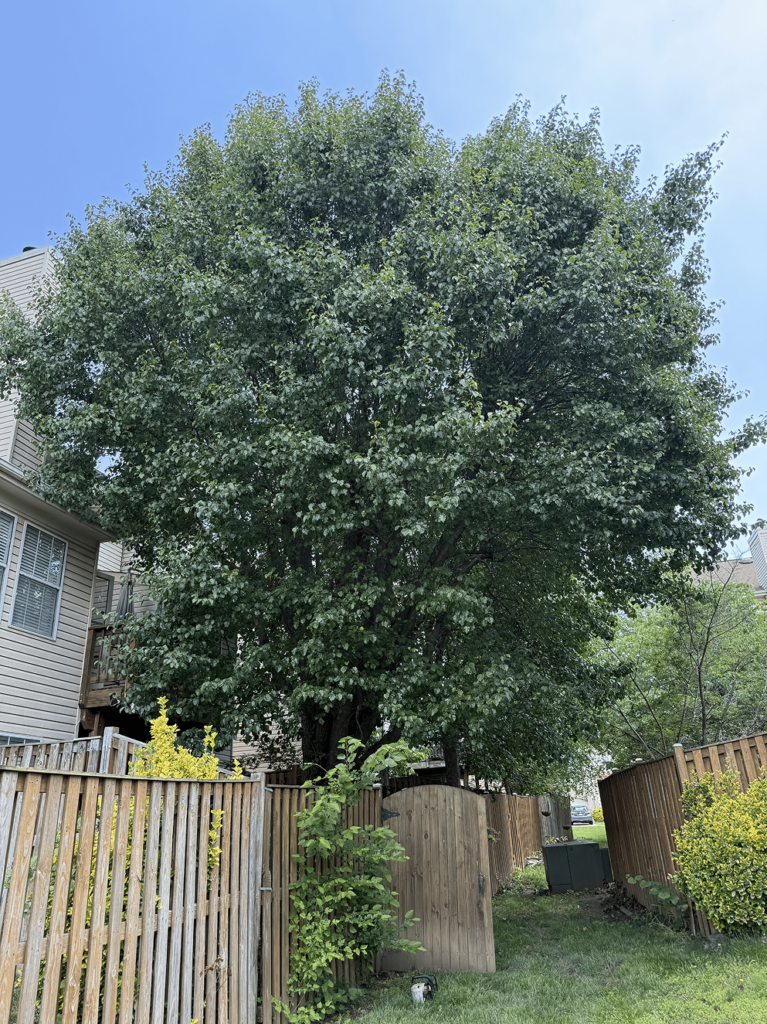
Walk through almost any established neighborhood in Manassas on a July afternoon and the relationship between trees and livability becomes immediately obvious. The blocks with mature, healthy canopy are 10 to 15 degrees cooler than the exposed ones. The yards with well-placed screening trees feel private and settled in ways that fenced lots don’t quite replicate. The homes shaded by large, healthy specimens sell faster and for more money than their sun-exposed neighbors—consistently, across market cycles.
Trees, when they’re healthy and well-placed and properly maintained, are one of the few things you can add to a residential property that delivers on every dimension simultaneously: comfort, beauty, privacy, energy savings, environmental value, and measurable financial return.
The key phrase in that sentence is “healthy and well-placed and properly maintained.” Trees that aren’t cared for don’t deliver those returns—they deliver the liability, maintenance burden, and property value reduction described in the previous articles in this series. The difference between a tree that adds value to a Manassas property and one that subtracts it is almost entirely a function of the tree care decisions made over its lifetime.
This article covers what healthy trees actually contribute to Manassas properties, how to maximize those contributions through smart species selection and strategic placement, what professional tree care in Manassas looks like across the full growing cycle, and how to think about trees as the long-term property investment they genuinely are.
What Healthy Trees Actually Contribute: The Evidence Behind the Claims
The benefits attributed to trees are sometimes stated in ways that sound more aspirational than factual. The actual evidence is more specific—and more compelling—than the general claims suggest.
The Shade Value Is Real and Measurable
A well-placed shade tree on the south or west side of a Manassas home doesn’t just make the yard more comfortable. It reduces the solar heat gain through windows and walls that drives air conditioning demand during the hottest months of the year. Studies by the USDA Forest Service and multiple university extension programs have quantified cooling cost reductions of 15 to 35 percent for homes with strategically placed mature shade trees on their south and west exposures.
In the Manassas climate—where summers are consistently hot and humid from late June through early September and air conditioning runs nearly continuously for months—that reduction represents a real and recurring dollar figure. A mature white oak or red maple shading the west-facing windows and the HVAC unit on a Manassas property isn’t just an aesthetic amenity. Over 20 years, it’s a significant cumulative energy cost savings.
The specific placement matters enormously. A tree that shades the roof and west wall during the hottest afternoon hours delivers the maximum cooling benefit. A tree that shades the east wall in the morning provides less benefit for cooling—mornings are cooler and the sun angle is lower. Strategic shade tree placement—which is a tree care planning decision that happens at the nursery stage, not after the tree is in the ground—determines whether a tree delivers meaningful energy savings or simply provides shade in directions that don’t affect the home’s thermal performance.
Privacy Screening With Trees Outlasts Every Alternative
Fences require maintenance, rot, blow over in storms, and have a visual character that most people find less appealing than living screening. Fence panels that were new five years ago are weather-worn and paint-faded today. Privacy trees, by contrast, grow more effective at screening every year—denser, taller, and more visually appealing as they mature.
The privacy value of well-chosen screening trees on a Manassas property compounds over time in ways that built alternatives don’t. A properly spaced row of Eastern arborvitae, a screen of native hollies, or a staggered planting of evergreen and semi-evergreen species along a rear property line becomes more effective every growing season while requiring less active maintenance than any fence equivalent.
For Manassas homeowners on lots where the proximity of neighbors, the view from a rear deck, or the visibility of the yard from an adjacent road creates a genuine privacy concern, tree-based screening is consistently the highest-satisfaction long-term solution—provided the species selection and spacing decisions were made correctly at the outset.
The Property Value Numbers in the Northern Virginia Context
The research on trees and property values is extensive enough that it’s moved from anecdotal to well-documented. Multiple studies in suburban real estate markets comparable to Manassas find that mature trees add between 10 and 20 percent to residential property values—with the highest premiums associated with large specimen trees in good structural condition, well-maintained front yard and backyard canopy, and properties where the tree canopy contributes meaningfully to shade and privacy without creating the liability concerns described in the previous article.
The Northern Virginia real estate market—competitive, well-educated buyers, high median home values—responds to mature tree canopy in ways that translate directly to sale price. Real estate agents who work Manassas listings regularly observe that homes with well-maintained mature trees photograph better, show better, generate more buyer interest, and receive stronger offers than equivalent homes without comparable tree canopy.
The inverse is equally documented—the previous article in this series covered in detail how tree problems reduce Manassas property values. The relevant point here is that the same tree that adds value when healthy can subtract it when it becomes a problem. Tree care is what keeps a tree on the right side of that line.
Tree Care in Manassas: What It Actually Involves
“Tree care” is sometimes understood narrowly as pruning and removal. Professional tree care in Manassas encompasses a much broader set of practices that collectively determine whether a tree reaches and maintains its potential for shade, privacy, structural integrity, and long-term health.
Structural Pruning: Investing Early for Long-Term Returns
The single highest-return tree care practice over a tree’s lifetime is structural pruning during its early years—while the tree is still young enough that corrective work is simple, inexpensive, and highly effective.
Young trees develop structural characteristics that will define their architecture for their entire lives: which stems become dominant, how branch unions form, whether co-dominant stem arrangements with included bark become permanent features of the tree’s structure. A tree service in Manassas that performs proper structural pruning on a young tree—establishing a clear central leader where appropriate, removing competing stems before they develop bark inclusion, balancing the weight distribution of the scaffold branches—is producing a tree that will be structurally sound, more wind-resistant, and lower-maintenance for decades to come.
The economics of structural pruning are compelling. A pruning session on a young tree that costs a few hundred dollars prevents the co-dominant stem removal, cabling installations, and potentially the full removal and replacement that poorly structured trees frequently require as they mature. In the Manassas context—where silver maple and tulip poplar develop structural problems quickly and at scale—early structural pruning on young trees is one of the highest-return investments in the tree care portfolio.
Crown Maintenance Pruning for Mature Trees
Established mature trees in Manassas backyards benefit from regular professional pruning cycles that accomplish several things simultaneously: removing dead, dying, and structurally compromised wood before it becomes a hazard; maintaining appropriate clearances from structures, utilities, and hardscape; improving the light penetration and air movement within the canopy; and preserving the aesthetic form that contributes to the tree’s visual and economic value.
The appropriate pruning interval depends on species growth rate, the tree’s current condition, and the specific goals for the tree on that property. Fast-growing species like silver maple may benefit from a three-to-five-year cycle. Slower-growing species like white oak may need attention only every seven to ten years. A tree care professional familiar with the specific species and conditions in Manassas can recommend the appropriate cycle for each tree on a property.
One specific pruning consideration that’s particularly relevant to Manassas properties involves oaks. As covered in the weather and seasonal tree care article in this series, fresh pruning wounds on oak trees during the growing season—late March through November—create infection risk for oak wilt, a disease that has been expanding its range in the Northern Virginia region. Professional tree care in Manassas schedules oak pruning during the dormant season as a standard practice, not as an optional preference.
Soil Health and Root Zone Management
Healthy trees grow in healthy soil, and in Manassas’s clay-dominant soil profile, maintaining healthy soil conditions in the root zone requires active management that most homeowners don’t think of as tree care but that directly affects tree health outcomes.
Soil compaction—from foot traffic, vehicle traffic, and the natural densification of clay over time—reduces the oxygen availability and water infiltration in the root zone in ways that stress even otherwise healthy trees. Professional soil aeration, the application of organic matter to improve soil structure, and the maintenance of proper mulch coverage over the root zone all contribute to the soil conditions that allow trees to thrive rather than struggle in Manassas’s clay soils.
The mulch ring that is standard good practice in professional tree care—2 to 4 inches of wood chip mulch applied from the root flare outward, kept away from direct trunk contact—does more for tree health in Manassas’s clay soil environment than most homeowners realize. It moderates soil temperature, retains moisture through dry periods, improves soil biology, and physically protects the root flare from the mower damage that is one of the most common sources of tree health decline in maintained residential landscapes.
Deep Root Fertilization for Stressed Urban Trees
Trees growing in the developed residential landscape of Manassas neighborhoods face soil nutrient conditions that differ significantly from the forest soils in which their species evolved. Fallen leaves—the primary organic matter input that maintains forest soil fertility—are raked and removed from residential yards rather than cycling nutrients back into the soil. Soil compaction, grade changes, and the competitive pressure of lawn grass all affect nutrient availability in ways that forest trees don’t encounter.
Deep root fertilization—the injection of slow-release fertilizer formulations directly into the root zone under pressure—delivers nutrients precisely where trees can access them and bypasses the competition from lawn grass at the surface. For trees that are showing stress symptoms, recovering from construction impact, or simply growing in the depleted soil conditions common to established residential properties, deep root fertilization is a tree care intervention that produces visible improvement in canopy density, growth rate, and overall vigor.
Pest and Disease Management
The Northern Virginia pest and disease landscape—described in detail in the weather and seasonal tree care article—requires active management for certain species and situations. Trees under pest pressure are less effective at delivering the shade, privacy, and aesthetic benefits that make them valuable, and untreated pest infestations can accelerate structural decline in ways that eventually require the removal of trees that could have been saved with timely intervention.
Proactive tree care in Manassas includes monitoring for the specific pest and disease pressures relevant to the species on the property. Ash trees that are being protected from emerald ash borer with systemic insecticide treatments are a specific example—the trees that survive and thrive in Northern Virginia’s post-EAB landscape are almost exclusively those that received professional treatment before the infestation progressed. Oaks being monitored for bacterial leaf scorch, beeches being watched for beech scale, and maples showing early signs of Verticillium wilt all represent situations where tree care attention at the right stage produces outcomes that neglect doesn’t.
Strategic Shade Tree Placement for Manassas Properties
The benefits of shade trees are real, but they’re delivered most effectively when placement decisions are made with the home’s orientation, the tree’s mature size, and the specific shading objectives in mind.
The South and West Exposure Priority
For cooling benefit—the primary energy-related return from shade trees in Manassas’s climate—shade trees on the south and west sides of the home deliver the greatest impact. The sun’s path places the most intense solar radiation on south and west-facing exposures during the hottest afternoon hours of the summer months, and shading those exposures reduces heat gain through windows and walls when it matters most.
A large deciduous tree positioned to shade the southwest corner of the home delivers benefit in two directions: it blocks direct solar gain during the hottest part of summer afternoons, and it drops its leaves in winter to allow passive solar heat gain during the months when that gain reduces heating costs. The seasonal deciduous cycle is, from an energy management perspective, precisely the right characteristic for a shade tree on a Manassas home’s south and west exposures.
Shading the HVAC Equipment
An often overlooked but well-documented shade strategy is positioning trees or large shrubs to shade the outdoor HVAC condenser unit. Air conditioning equipment operates less efficiently when the condenser is exposed to direct afternoon sun—the condenser’s job is to reject heat to the surrounding air, and it does this more efficiently when the air around it is cooler and when the unit itself isn’t absorbing direct solar radiation.
A tree or large evergreen shrub that shades the condenser during peak afternoon hours can improve air conditioning efficiency measurably—reducing both operating costs and equipment wear over time. This is a specific placement decision that belongs in the tree care planning conversation, not an afterthought after planting decisions have been made.
Canopy Height and Roof Clearance
Effective shade trees for Manassas homes need to be large enough at maturity to provide meaningful canopy over the structure without creating the proximity problems described throughout this series. The species that work best are those with mature heights and canopy spreads that position shade where it’s needed while maintaining the structural and root zone clearances that protect the home.
For full-sized shade trees on south and west exposures, species in the 40 to 60 foot mature height range with broad canopy spreads—native oaks, American beech on appropriate sites, hickory species—provide the best combination of shade effectiveness and appropriate distance from the structure. These trees need to be planted far enough from the home that their mature canopy provides overhead shade without the branches reaching the roofline—typically 20 to 30 feet from the foundation, depending on the species’ mature canopy spread.
Privacy Screening With Trees: Species, Spacing, and Long-Term Planning
A well-designed tree-based privacy screen on a Manassas property is one of the highest-satisfaction landscape investments available—but it requires species selection and spacing decisions that account for the screen’s function, the site’s conditions, and the long-term management commitment it requires.
Evergreen Versus Deciduous Screening
The first decision in designing a privacy screen is whether year-round screening is needed or whether seasonal screening is adequate. Many Manassas homeowners find that the outdoor spaces they want screened—decks, patios, backyard play areas—are primarily used during the warmer months, when deciduous trees and shrubs provide effective screening. If the privacy need is primarily seasonal, a combination of deciduous and semi-evergreen species may be more appropriate than a fully evergreen screen.
For year-round screening needs—blocking a road that generates noise and light year-round, screening a neighbor’s structure that is visible from interior windows in winter, or providing a noise buffer that functions continuously—evergreen species are necessary. The options that perform well in Manassas’s climate include:
Eastern arborvitae (Thuja occidentalis) is the most commonly planted privacy screen species in Northern Virginia and performs reliably in Manassas’s conditions when properly spaced and maintained. The key caution with arborvitae is spacing—plants installed too closely together are prone to the snow and ice loading damage that splits and kills sections of the screen, and overcrowded arborvitae develop thin, weak stems prone to breakage. Proper spacing of 5 to 6 feet on center produces a screen that fills in fully while maintaining structural integrity.
Native hollies (Ilex opaca and Ilex x meserveae) are underused as privacy screening plants in Manassas and deserve more consideration than they typically get. American holly grows into a significant evergreen tree at 15 to 30 feet—large enough to provide real screening height—and its native status means it’s fully adapted to Manassas’s soil and climate conditions without the cold hardiness edge cases that affect some cultivated evergreen species. The dense, thorny foliage provides screening that is both visually impenetrable and physically discouraging.
Leyland cypress was planted extensively as a fast-growing privacy screen throughout Northern Virginia in the 1990s and 2000s, and those plantings are now revealing the problems with this species that arborists predicted: disease susceptibility, shallow rooting that makes established trees prone to storm failure, and mature sizes that frequently exceed the available space. New privacy screen plantings in Manassas should consider more site-appropriate alternatives before defaulting to Leyland cypress.
Eastern red cedar (Juniperus virginiana) is a Virginia native that provides excellent wildlife habitat alongside its screening function, tolerates a wide range of soil conditions including Manassas’s heavy clay, and develops into a genuine small tree rather than a large shrub. It’s drought-tolerant once established—a meaningful advantage during Manassas’s periodic summer dry periods—and provides year-round screening without the scale problems that affect Leyland cypress.
Layered Screening for Natural Appearance
The most effective and most visually appealing privacy screens in established Manassas neighborhoods aren’t single-species rows planted at equal spacing. They’re layered plantings that combine taller canopy trees with mid-height evergreen trees and understory shrubs to create screening that functions at multiple heights simultaneously and that looks like a natural woodland edge rather than a planted fence.
A layered screen might include tulip poplar or native oak at the back for canopy height, native holly or arborvitae at the mid-level for dense year-round coverage, and native understory shrubs—inkberry holly, native viburnums, or sweetbay magnolia—at the front to fill the lowest zone. This combination screens effectively from ground level through full canopy height while providing wildlife habitat, seasonal interest, and a visual character that enhances rather than merely supplements the property’s appearance.
The Spacing Question for New Screens
Impatience is the enemy of well-designed privacy screens. Homeowners who plant screening species too closely together to achieve faster initial coverage create the overcrowding problems—competition for light and water, structural weakness, disease susceptibility—that compromise the long-term effectiveness of the screen. A screen that looks full three years after planting may have significant dieback and structural problems ten years later because the individual plants were never given room to develop properly.
Proper species-appropriate spacing, supplemented if desired by temporary annual plantings during the establishment years, produces a screen that functions effectively for decades rather than one that looks good briefly and then requires significant intervention.
The Tree Care Calendar for Manassas Properties
Professional tree care in Manassas follows the seasonal logic described in the weather and tree health article in this series. Understanding what care is appropriate in each season helps homeowners plan and budget for tree care as the ongoing investment it is.
Winter: Structural Pruning and Assessment
The dormant season—December through mid-March in the Manassas area—is the optimal window for structural pruning of most deciduous species. The leafless canopy is fully visible, allowing accurate assessment of the branch architecture and identification of the pruning work needed. Cuts heal without interfering with the energy demands of leaf-out. Disease and pest transmission risks are reduced for susceptible species. And tree care scheduling is typically more available and more competitively priced during the off-peak season.
Winter is also the right time for comprehensive tree assessment—walking the property with an ISA-certified arborist to evaluate the condition of every significant tree, identify structural concerns that the leafless canopy reveals, and plan the tree care work for the coming growing season.
Spring: Planting, Monitoring, and Early Pest Watch
Spring is the secondary planting window—acceptable for most species when followed by diligent watering through the summer, though fall remains the preferred planting time in Manassas’s climate. New plantings installed in spring require active monitoring through their first summer to catch drought stress early and respond with supplemental irrigation before permanent damage occurs.
Spring is also when pest emergence begins for several species relevant to the Manassas tree canopy—the beginning of the spotted lanternfly nymph season, the first emergence of wood-boring beetles that target stressed trees, and the window when foliar disease symptoms begin to develop in susceptible species. Early monitoring and early intervention are the most cost-effective approaches to pest and disease management.
Summer: Deep Watering, Monitoring, and Hazard Assessment
Summer is the maintenance season—active monitoring for pest and disease symptoms, supplemental deep watering for young trees and stressed established trees during dry periods, and prompt attention to any structural concerns that develop during storm season.
Summer is not the pruning season for most species—the energy demands of maintaining a full canopy leave trees with less reserve capacity to respond to pruning wounds, and the disease transmission risks for susceptible species are highest during the growing season. The exception is dead wood removal, which is appropriate at any time and which reduces overhead hazard risk during the storm season when falling dead wood is most likely to cause damage.
Fall: The Priority Season for Tree Care Investment
Fall is the most important tree care investment season for Manassas properties. Root growth is actively happening after leaf senescence. Planting in fall gives new trees an immediate root establishment advantage over spring plantings. Fall fertilization, mulching, and soil amendment deliver directly into the active root growth period.
Fall is also the window for addressing structural concerns before winter tests them—scheduling cabling and bracing work, removing trees identified as hazardous before ice and snow loading creates emergency conditions, and getting the pruning planning done so dormant season work can be scheduled efficiently.
Investing in Tree Care: The Long View for Manassas Homeowners
Professional tree care in Manassas isn’t a one-time expense. It’s a recurring investment that produces compounding returns over the life of the trees being maintained—and that protects and grows the property value contribution that healthy trees deliver.
The homeowner who budgets for regular professional pruning cycles, soil health management, pest monitoring, and proactive structural assessment is maintaining trees that become more valuable to the property every year—more effective at shading, more established as privacy screens, more structurally sound as they mature, and more impressive as specimen trees in a competitive real estate market.
The homeowner who defers tree care until visible problems develop is managing a deteriorating situation where each deferred season increases the eventual cost and reduces the remaining options. The beautiful white oak that would have been a marketable asset with periodic professional care becomes a disclosed liability when structural decline has been allowed to progress for years without attention.
The financial case for proactive tree care in Manassas is straightforward: the cost of regular professional maintenance is a fraction of the cost of corrective work after neglect, and both are fractions of the property value reduction and emergency management costs that result from allowing tree problems to develop without intervention.
Grow More Value With United Tree Care
Healthy trees don’t happen by accident in Manassas. They’re the product of thoughtful species selection, strategic placement decisions, and the kind of professional tree care that keeps them structurally sound, pest-free, and growing toward their full potential.
United Tree Care provides professional tree care throughout Manassas and Northern Virginia—from structural pruning and root zone management to pest monitoring, new tree planting consultation, and the full range of tree care services that healthy, high-value trees require. The team brings ISA-certified arborist expertise, genuine knowledge of the local species and soil conditions, and the professional standards that distinguish tree care done right from tree care done cheaply.
Whether you’re establishing a new shade tree program for a property you’ve recently purchased, maintaining the mature canopy of an established home, planning a privacy screen planting, or simply want a professional assessment of where your trees stand and what they need—United Tree Care is ready to help you get the most from the trees on your Manassas property.
Reach out to United Tree Care today to schedule a professional tree care consultation. The trees that make your property more comfortable, more private, and more valuable are worth the investment that keeps them that way.